

Flatter Insights – Post 3
Screentime is Replacing Sunshine
by Brittany Chiang (words are my own, not written with AI)
Over Spring Break this year, Oliver and I rented a rustic cabin and hauled four children, six bikes, and 10 lb. Shi Tzu out to Shenandoah National Park’s Lewis Mountain Campground. The rustic cabins on this campground are not equipped with kitchens, refrigerators, or even sinks— so all of our cooking took place outside–from coolers and over a fire. The next day we had a packed scheduled of hiking, riding bikes, and enjoying the national park. Our second evening while sharing stories around camp chairs at our site, we all felt a bit flushed and fatigued, and I was even concerned that one of the kids had brought a bug from school and we were on our way to a household illness. It wasn’t until I looked in the mirror and saw my red cheeks that I realized we were all simply sunburned. That day at the campground, we made the absolute most of it–spending all 13 hours and 25 minutes of available daylight taking in the sun from sunrise to sunset.
When is the last time you spent the entire day under the sun?
This trip made me realize that, even for a nature lover, I spend an embarrassingly small amount of time exposed to the sun during a normal workweek, which caught me off guard. I also realized that this lack of sunlight was having a negative impact on my body. I remembered my doctor recommended I take a daily Vitamin D supplement to augment my sun exposure–but didn’t think much of it or change any of my habits. After this Spring break, I promised myself I would find time for more minutes under the sun during the work week.
It isn’t just me and my family that are feeling the impacts of this lack of sun exposure. The modern information-based workforce is also experiencing a measly ration of sunlight throughout their workweek. And this reduction in time spent outdoors applies to both working hours and leisure time– as more and more of our leisure time is spent in front of a screen.
What is the remedy to this problem, when technology is so often incompatible with sunlight?
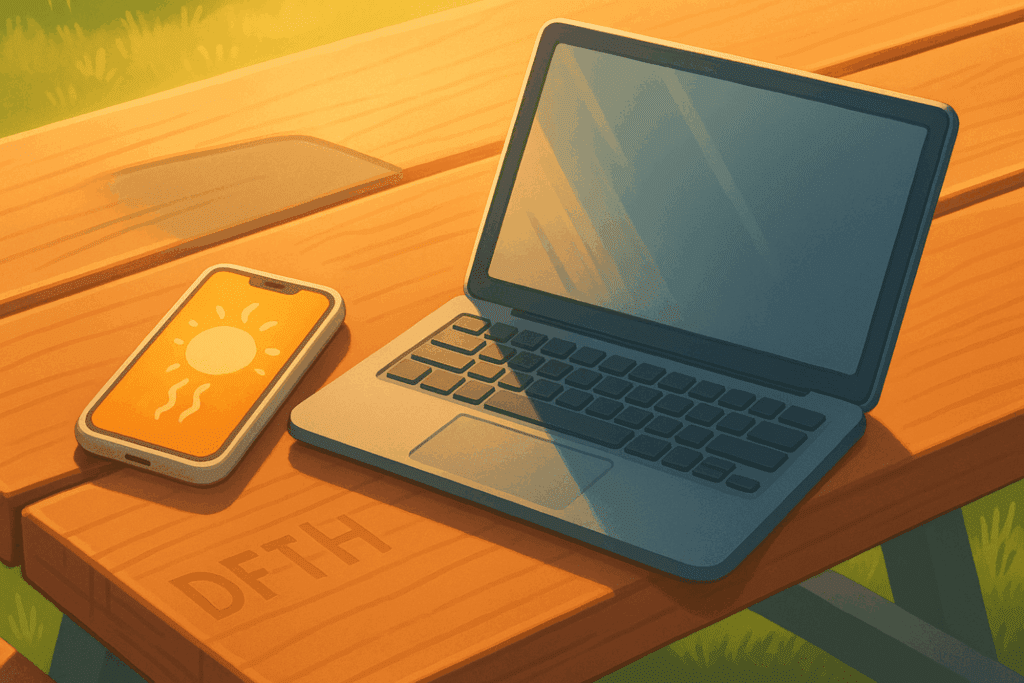
I have defiantly lugged my “portable” workstation including my laptop, charger, iPhone, and notebook out into the sun for a working session to thaw my body from the frigid office air conditioning. After about 30 minutes, my iPhone is nagging me with a heat warning, I have to run inside to grab a token for MFA, and the glare on my laptop is preventing me from reading the words on the screen.
Our screentime is reaching as many hours as there are hours of daylight available to us
We are not the first generation experiencing the health implications of reduced sunlight. In the early 20th century due to industrialization, lack of sun exposure was said to have caused rickets in children. This deficiency was addressed via adding vitamin D to milk. However, this problem was not completely resolved. Our sun exposure continues to decline by at least 5 minutes per year, and Vitamin D deficiencies continue to climb, increasing 15-fold from 2000 to 2014.
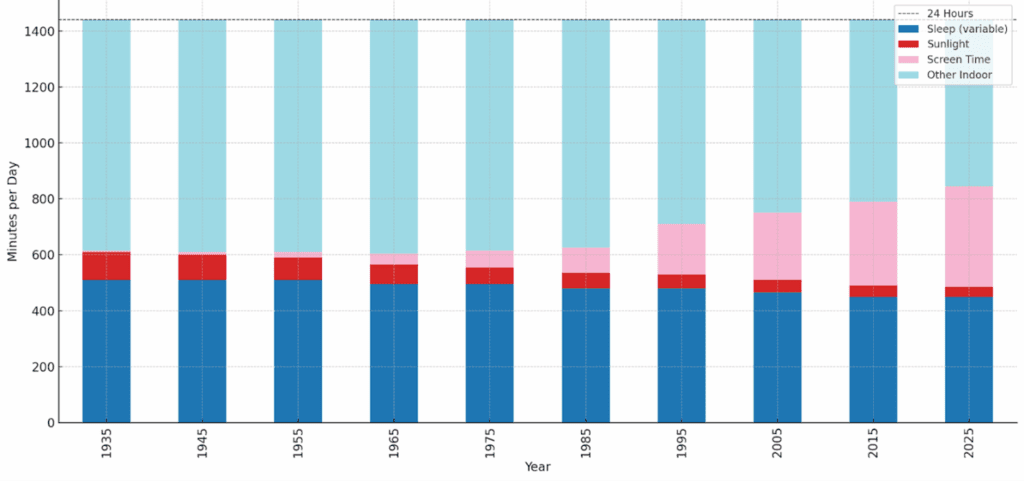
Time estimates for Virginia based information workers, modeled with real daylight and behavioral data (1935–2025)
There is always hope, and a positive shift is happening. The workforce is demanding more balance whether they are remote or in person. What can you do to increase the sun exposure for your team–not only for the mental and physical health benefits, but for productivity? Many are rethinking the workday and incorporating more movement, natural light, and intentional screen-free time.
Can you afford for your workforce to be tied to screens for the majority of hours during the workday? What productive activities can and must take place away from a screen?
In the spirit of experimentation, the upcoming work week could be an opportunity to test out some new habits. What tasks already in your work queue could be accomplished away from a screen? Some are turning to AI enabled smart glasses and voice assistance to support mobile workflows. Spending time walking in silence is another healthy and productive way to spend at least some time in the workday.
While these shifts may be small, the potential benefits for mental clarity, healthy, and even creativity and productivity may emerge into your schedule.

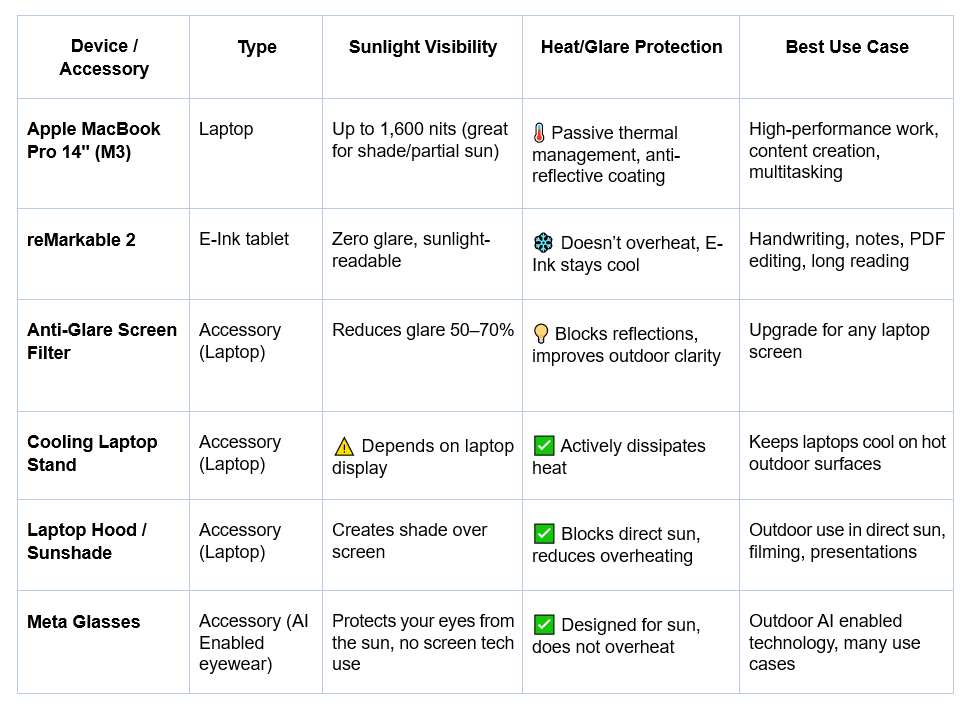
Below, I have curated a few tools and ideas that may help if you’re looking to introduce more sunlight into your workweek. This is something I am actively experimenting on, and I am happy to share what has worked for me!
Reach out to me at Excellence@flatterinc.com to connect!